


We take more photographs today than ever before.
They live on our phones, computers, social media accounts, and somewhere in that mysterious place we call “the cloud.” We photograph birthdays, vacations, graduations, weddings, grandchildren, and selfies with friends.
And because those photographs are digital, we assume they will always be there.
But will they?
I recently spoke to a family preparing a slideshow for their high school senior. As they gathered photographs, they discovered something heartbreaking: there was a large period of their children’s lives for which they had almost no images.
The photographs had been stored on a hard drive, but the hard drive failed.
Imagine—the only photographs remaining from part of your children’s childhood survived because someone happened to post them on social media years ago.
Suddenly, a digital file doesn’t feel quite so permanent.

The Cloud Is Convenient. It Is Not Your Family Archive.
I’m certainly not against digital photography. I use digital technology every day, and digital backups are an important part of protecting our photographs.
The danger comes when we confuse having a digital copy with preserving a photograph.
Technology is constantly changing. VHS tapes gave way to hard discs and DVDs. CDs gave way to USB drives. Computers that once came standard with CD drives no longer have them, and even USB connections continue to change.
Hard drives fail. Phones are lost. Passwords are forgotten. Accounts become inaccessible. Files are accidentally deleted. Viruses happen.
None of these things seem terribly important—until the file that disappears is the photograph you would give anything to have back.
What Happens to the Photographs on Your Phone When You’re Gone?
It may be uncomfortable to think about, but it matters. Someone in your family passes away, and their phone contains thousands of photographs.
Who knows the password? Can anyone access the cloud to retrieve the images? A phone sitting in a drawer may contain years of family history, but without access to it, those photographs might as well not exist.
Social media is not the answer.
Facebook, Instagram, and whatever comes next were never designed to preserve your family history. Platforms change. Accounts disappear. Images are compressed.
Think about MySpace. At one time, millions of people documented their lives there.
What will today’s social media platforms look like 5 or 15 years from now?
I don’t know.
And that’s precisely the point.
A Wall Filled With Photographs
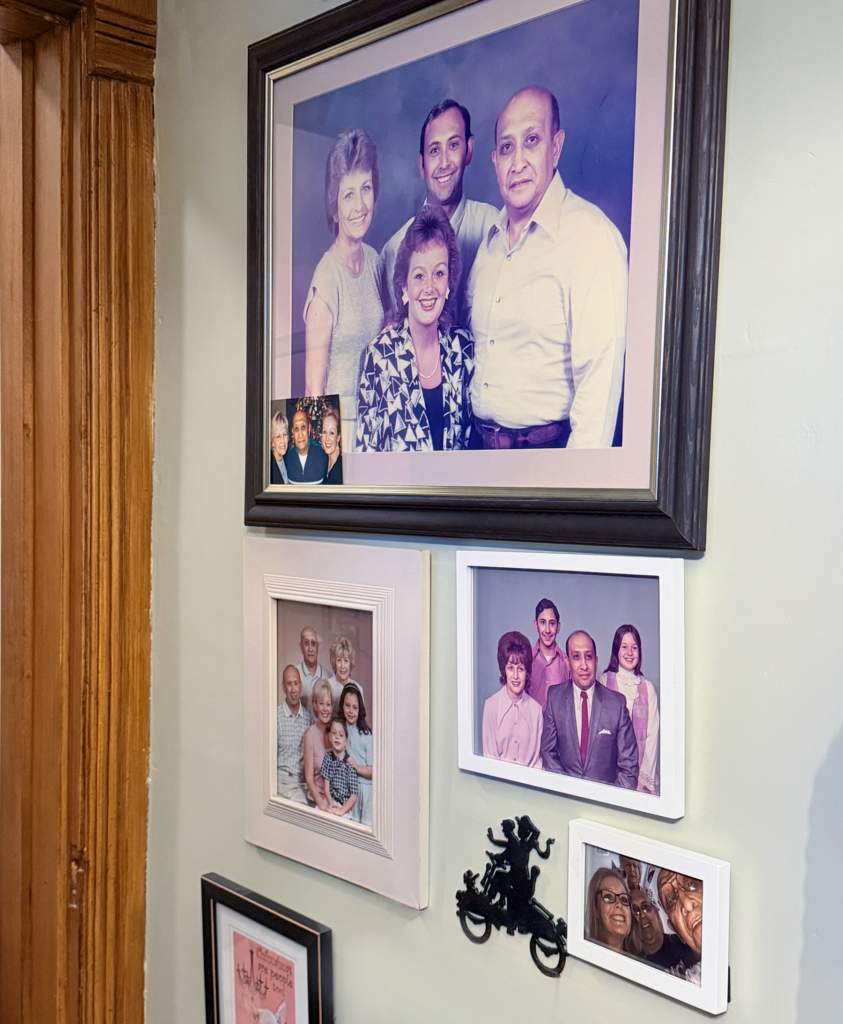
A friend of mine has a wall in her home covered with family portraits. Not just photographs of her children, but generations before her.
Parents. Grandparents. Aunts and Uncles. Ancestors she’d never met.
Standing in front of that wall, I could see her family history. No password required. No software update. No scrolling. Just people.
You can look at a grandfather and recognize his grandson’s eyes. You can compare a senior portrait with a great-grandparent’s photograph and discover the same smile generations apart.
That is something remarkable about printed photographs.
They allow generations that never occupied the same moment in time to stand beside one another.
Photographs Hold Memories Our Minds Sometimes Lose
After my father passed away, my husband and I were helping my mother clean out the garage when we discovered an old moving box.
Inside were my father’s 35mm slides from the 1960s. That box had traveled with our family from house to house for years.
As I looked through those images, things came back to me that I hadn’t consciously remembered—a car we owned, a place we lived, someone’s hairstyle, clothes from another era, a family dog.
Suddenly, an image would make me think, I remember that.
That’s one of the extraordinary things photographs do.
They hold memories for us when our minds no longer do.
A Portrait That Became Her Legacy

I photographed the mother of a dear friend of mine.
Throughout her marriage, she had always come second. After her husband passed away, her daughter—my friend—brought her into my studio so I could create a portrait that was entirely about her.
This was her moment to be seen, celebrated, and remembered.
We created a beautiful portrait, and I delivered her finished images.
Just three weeks later, she passed away.
The portrait we created that day became the centerpiece of her celebration of life.
I think about that session often. What began as an opportunity to celebrate a woman became something far more meaningful to the family she left behind.
That photograph wasn’t simply another image stored on a computer. It was a beautiful, tangible reminder of a mother, a woman, and a life worth celebrating.
We don’t always know how much time we have with the people we love. But we can make the time to photograph them while they’re here.
And another story gets told.
Get in the Photograph
There is another part of this conversation I believe strongly as a portrait photographer.
Get in the photograph.
I’ve watched mothers encourage everyone else to be photographed while they stay behind the camera because they don’t like their hair, their clothes, or their weight.
Your children aren’t going to care.
Someday, they won’t look at that photograph and think about the ten pounds you wanted to lose.
They’re going to think:
That’s Mom.
They’re going to remember how you hugged them, how you laughed, and how you looked during that chapter of their lives.
Your presence matters more than perfection.
Print the Photographs That Matter
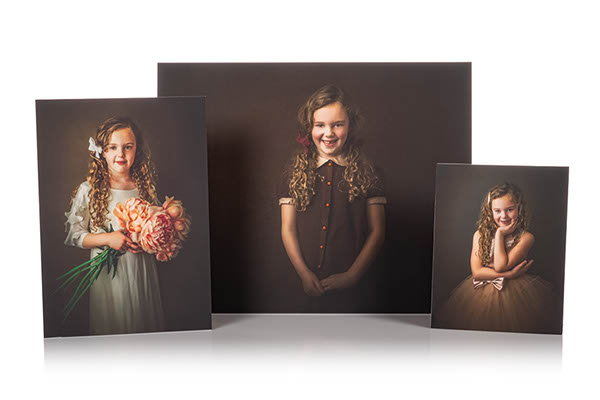
I’m not suggesting you print every photograph on your phone.
But I do believe we should intentionally decide which photographs deserve to survive beyond the device on which they were created.
Back up important files in more than one place. Make sure someone you trust knows how to access them. Label old photographs with names, dates, and places while someone still remembers the stories.
And most importantly:
Print the photographs that matter.
Create the album.
Frame the family portrait.
Put your senior on the wall.
Print the photograph of Grandma.
Because a digital file is something you store.
A printed photograph is something you live with.
Your Family Deserves More Than a Folder in the Cloud
Someday, your grandchildren—or their grandchildren—may hold one of your photographs.
They may notice they have your eyes.
Trends change, and so do those hairstyles and clothes!
Does the image take you back to that exact moment?
And for a moment, someone who never had the opportunity to know you will feel connected to you.
That’s legacy.
At Amy May Photography, I believe professional photography should become more than another collection of digital files. I help my clients create photographs meant to be enjoyed today and preserved for generations—from beautifully printed portraits and wall art to heirloom albums that tell the story of the people who matter most.
Technology will continue to change.
Your family’s story shouldn’t disappear with it.
And if a photograph is important enough that you would be heartbroken to lose it, it’s important enough to print.



Comments +